
Meditation has long been used as a powerful method of providing clarity of thought, emotional balance, and Mental Health. Meditation is still an important part of today’s culture and helps people deal with their stressors and other distractions caused by modern life.
In this article, we will look at the 10 benefits of Meditation, as well as how Meditation continues to change the lives of people around the world today.
10 Benefits of Meditation –
- Improving Your Mind- Set
- Establishing a State of Inner Peace
- Lowering Stress Levels
- Improved Sleep Quality
- A Higher Level of Concentration and Focus
- Improved Health through a Balanced Lifestyle
- Body Awareness
- Better Body Posture
- Spiritual Growth
- Emotional Stability
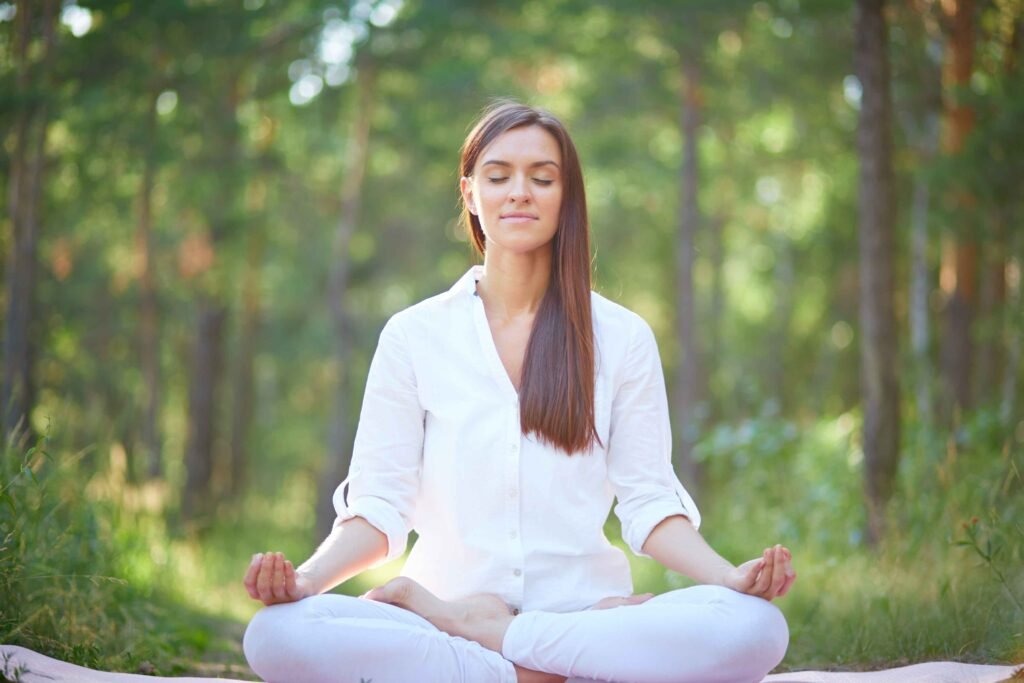
What Is Meditation?
Meditation refers to the act of consciously directing attention inward for the purpose of cultivating awareness, focus, and quiet inner space. It allows an individual the opportunity to see their own thoughts, feelings and sensations without any attachment or judgement towards them.
The tradition of Meditation requires one to concentrate on breathing, repeating a mantra or simply becoming fully aware of the present moment. Rather than attempting to control one’s mind, Meditation serves to connect us with our true Selves so we may ultimately have some clarity about who We are and how We connect to the Universe around Us.
Also Read – Top 10 Best Yoga Schools in the World
Over time one’s mental fluctuations become less and less chaotic, and through Meditating, a person will ultimately form a deeper connection with their true self, through achieving ultimate peace and clarity through Self-awareness.
Here are the 10 Benefits of Meditation –
1. Improving Your Mind
Meditation helps to create time for deep contemplation, allowing thoughts to become less cluttered and more organized. When we slow the pace of our thoughts down through meditation, we actually gain greater clarity and focus.
This ability to observe our thoughts without the pull to get lost in them gives rise to greater insight and clarity of thought and action and creates opportunities for improved decision-making, problem-solving, and overall understanding of situations we encounter in our day-to-day life.
The ancient yogis believed that clarity of mind provided the path to wisdom. When we mediate, our minds are organized, calm, and able to respond rather than react.

2. Inner Peace
One of the greatest gifts of meditation is the ability to attain a state of inner peace. Once the mind becomes more quiet through meditation, the emotional disturbances in our lives become less intense.
By directing your attention inward and away from the stressors of the outside world, we can create a deep sense of quiet within. Inner peace does not depend on what is happening around you, it exists within.
3. Lowering Stress Levels
Meditation helps to lower stress levels by promoting relaxation and decreasing tension on the nervous system. When you regularly practice meditation, the levels of stress hormones in the body will be reduced, encouraging the body to move into its natural state of rest and repair.
You can focus on either your breath or your awareness, which will allow the mind to cease its habitual tendency to replay events and feelings associated with fear and worry.
4. Improved Sleep Quality
Having a busy brain often results in not getting quality sleep. By practicing meditation, your brain will calm down and relax, allowing for an easier transition to sleep.
As you become accustomed to meditating, your body will begin to recognize the feelings of deep relaxation and assist you in developing natural sleep patterns. Ancient yogis understood that it was important to resort to meditation at twilight to be in harmony with the cycles of nature that support a restful experience.
5. Better Concentration and Focus
Daily meditation allows a person to develop their skill of being focused at the present moment. When meditating, you are training your mind to remain focused on one task at a time rather than being distracted by multiple thoughts.
As you engage in meditation on a regular basis, you will learn to minimize distractions, maximize productivity, and accomplish daily activities in a clearer and more efficient manner.
6. Healthy Lifestyle
Through the practice of meditation, you can achieve a balanced lifestyle by developing a greater understanding of yourself and your habits related to food, movement and rest.
As awareness grows, it becomes easier to create and adopt healthier habits. Ancient yogic culture led a simple, disciplined and self-aware lifestyle. Today, meditation encourages a balanced and sustainable life through moderation, self-care and conscious choices.
7. Body Awareness
Meditation enhances the relationship between mind and body through concentration on bodily sensations and inner awareness. This heightened awareness allows individuals to recognize bodily tension, postural habits, and physical needs.
Ancient yogis utilized body awareness to maintain health and prevent imbalance. Through regular meditation, practitioners develop increased sensitivity to physical signals for movement, alignment, or assistance, reducing slouching and tension naturally.
8. Better Body Posture
Increased spinal alignment and correct body positioning result from greater postural awareness during daily meditation.
Participating in meditation helps teach an upright balanced spine, influencing posture in daily life. Ancient sages advised close attention to posture to promote energy flow through the spine and mental stability. Over time, individuals are less likely to develop slouched postures and bodily tension.
9. Spiritual Growth
Traditionally, meditation has been a means for spiritual growth in yogic traditions. It allows individuals to move beyond thoughts and emotions into deeper dimensions of consciousness.
With consistent practice, awareness expands, compassion deepens, and connection increases. The evolution of awareness occurs through inner silence, resulting in greater meaning and purpose for living.
10. Emotional Stability
Meditation aids in the regulation of emotion by creating distance between feelings and actions. Instead of emotional overwhelm, practitioners observe emotions with acceptance and without judgment.
Through continued practice, meditation develops patience, emotional strength, and resilience. Ancient yogic texts teach that emotional balance is essential for mental, physical, and spiritual harmony. With balance, individuals cope with life’s highs and lows with greater compassion and understanding.