

If you’ve been diagnosed with diabetes, you’ve probably heard the same advice on repeat: eat right, take your medication, and stay active. But “stay active” can feel vague when your joints ache, your energy is low, or you simply don’t know where to start. This is where yoga poses for diabetes come in.
Yoga isn’t a replacement for medication or a doctor’s guidance, but a growing body of research suggests it can be a valuable addition to a diabetes management plan. It’s gentle on the joints, doesn’t require a gym membership, and can be done in the space of your living room. In this article, we’ll walk through five yoga poses for diabetes patients at home that are backed by traditional practice and modern wellness understanding, along with tips on how to build them into a routine you’ll actually stick with.
By the end, you’ll know exactly which poses to try, how to do them safely, and how often to practice for the best results.
Also Read – 10 Yoga Asanas for Weight loss for Beginners
Why Yoga Helps with Diabetes Management
Yoga helps manage diabetes by reducing stress hormones, improving insulin sensitivity, and encouraging gentle physical movement that supports better glucose metabolism. Chronic stress raises cortisol, which can push blood sugar levels up, so activities that calm the nervous system have a direct, physiological benefit for people with diabetes.

Beyond the hormonal piece, yoga also improves circulation, supports weight management, and can enhance sleep quality—all factors that influence blood sugar control. Many poses gently massage and stimulate the pancreas and abdominal organs, which some practitioners believe supports insulin production, though this effect is best understood as a complement to medical treatment rather than a substitute for it.
For people managing type 2 diabetes in particular, combining yoga with a balanced diet and consistent movement has been associated with improved fasting glucose readings over time. It’s worth noting that individual results vary, and yoga should always be practiced alongside—not instead of—the plan set by your healthcare provider.
Here are the 5 Yoga Poses for Diabetes –
1. Vajrasana (Thunderbolt Pose)
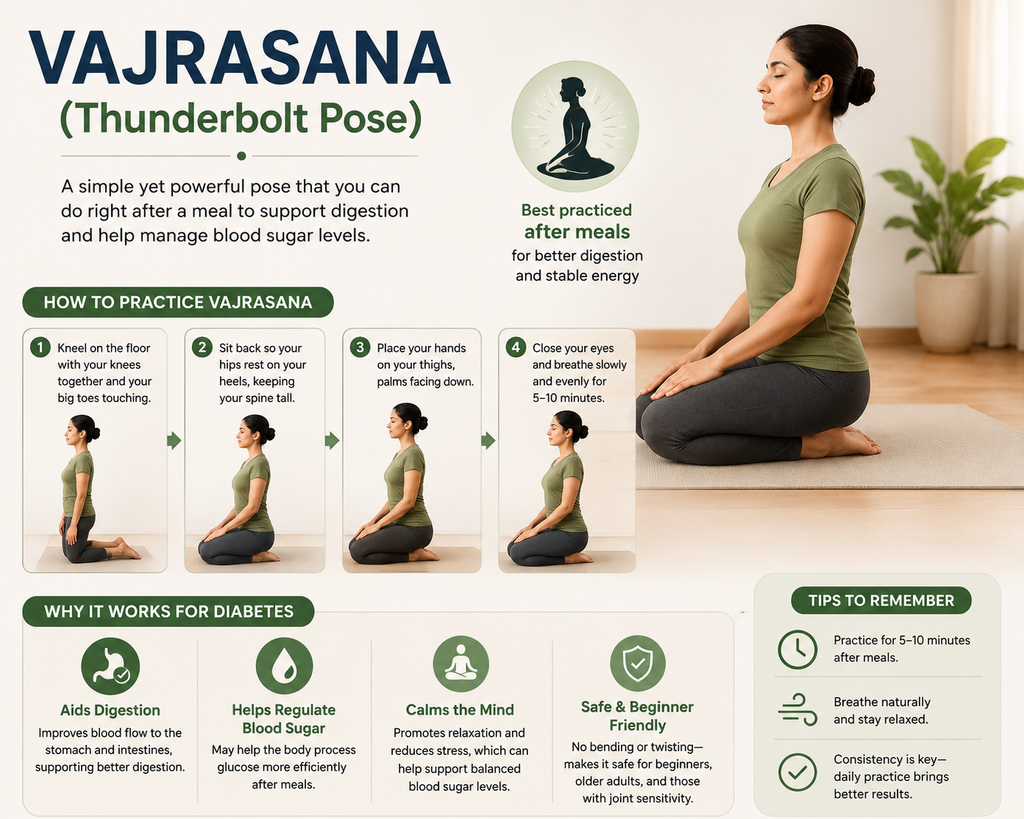
Vajrasana is one of the few yoga poses that can be practiced right after a meal, which makes it especially useful for people managing blood sugar spikes.
How to Practice Vajrasana
- Kneel on the floor with your knees together and your big toes touching.
- Sit back so your hips rest on your heels, keeping your spine tall.
- Place your hands on your thighs, palms facing down.
- Close your eyes and breathe slowly and evenly for 5–10 minutes.
Why It Works for Diabetes
Sitting in Vajrasana after eating is believed to aid digestion by improving blood flow to the stomach and intestines, which may help the body process glucose more efficiently. It’s also one of the safest poses for beginners, older adults, or anyone with joint sensitivity, since it requires no bending or twisting.
2. Dhanurasana (Bow Pose)
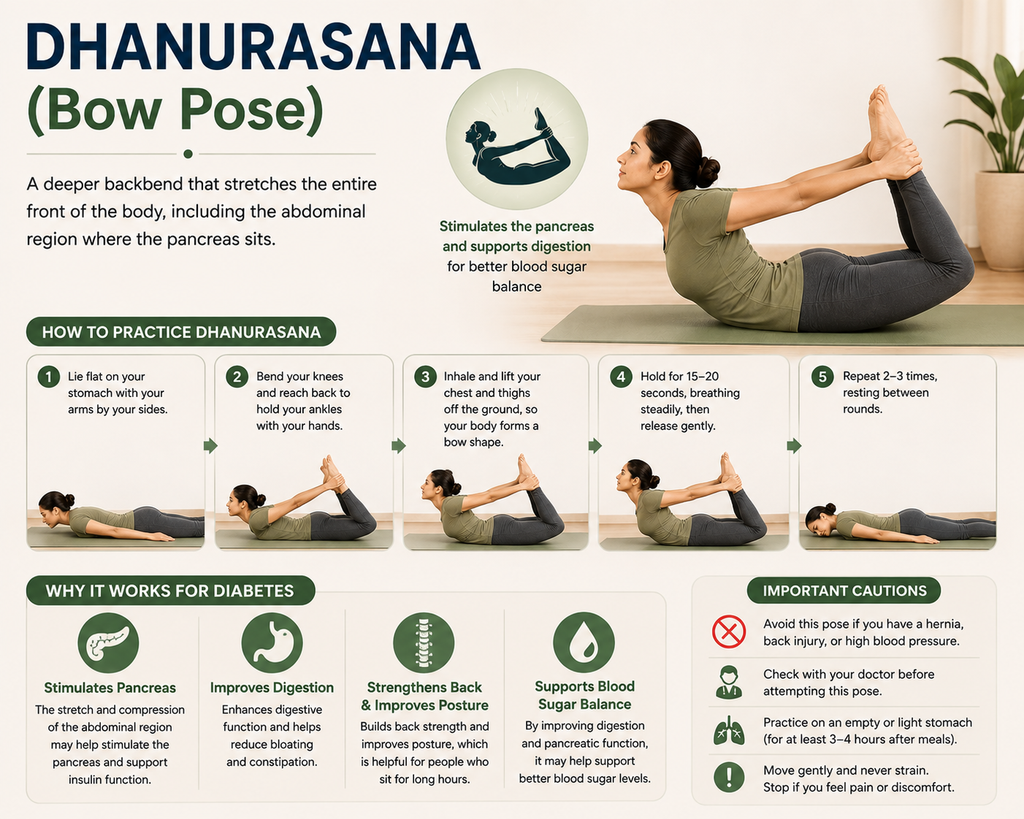
Dhanurasana is a deeper backbend that stretches the entire front of the body, including the abdominal region where the pancreas sits.
How to Practice Dhanurasana
- Lie flat on your stomach with your arms by your sides.
- Bend your knees and reach back to hold your ankles with your hands.
- Inhale and lift your chest and thighs off the ground, so your body forms a bow shape.
- Hold for 15–20 seconds, breathing steadily, then release gently.
- Repeat 2–3 times, resting between rounds.
Why It Works for Diabetes
By stretching and compressing the abdominal region, Dhanurasana is thought to stimulate the pancreas and improve digestive function. It also strengthens the back and improves posture, which can be helpful if long periods of sitting are part of your daily routine. Skip this pose if you have a hernia, back injury, or high blood pressure, and check with your doctor before attempting it.
3. Paschimottanasana (Seated Forward Bend)
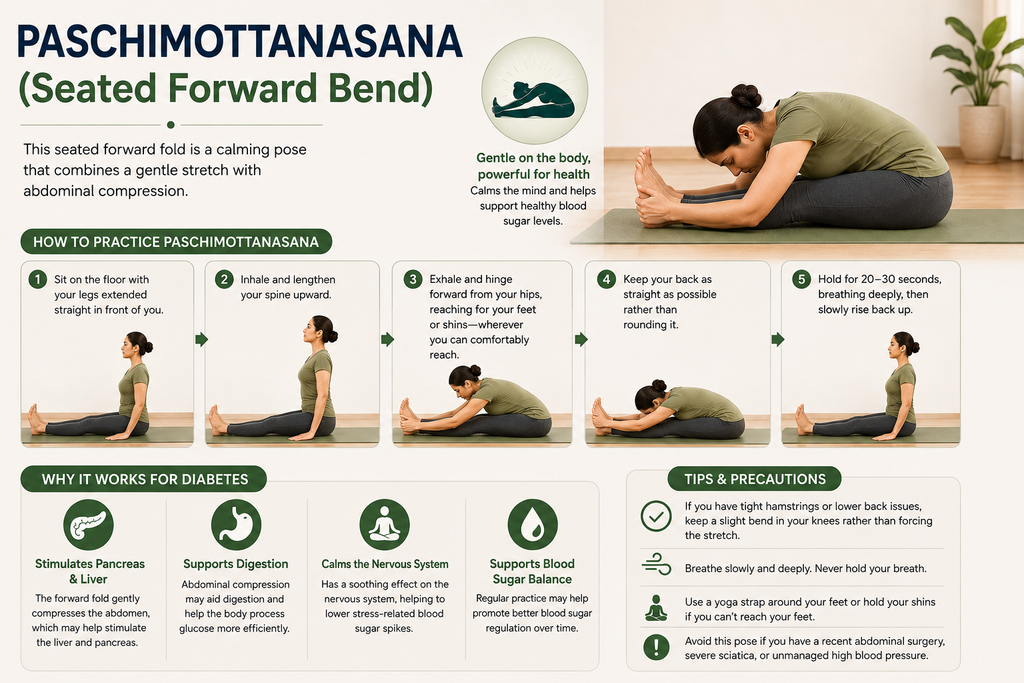
This seated forward fold is a calming pose that combines a gentle stretch with abdominal compression.
How to Practice Paschimottanasana
- Sit on the floor with your legs extended straight in front of you.
- Inhale and lengthen your spine upward.
- Exhale and hinge forward from your hips, reaching for your feet or shins—wherever you can comfortably reach.
- Keep your back as straight as possible rather than rounding it.
- Hold for 20–30 seconds, breathing deeply, then slowly rise back up.
Why It Works for Diabetes
The forward fold gently compresses the abdomen, which may help stimulate the liver and pancreas. It also has a soothing effect on the nervous system, helping to lower stress-related blood sugar spikes. If you have tight hamstrings or lower back issues, keep a slight bend in your knees rather than forcing the stretch.
4. Ardha Matsyendrasana (Half Spinal Twist)
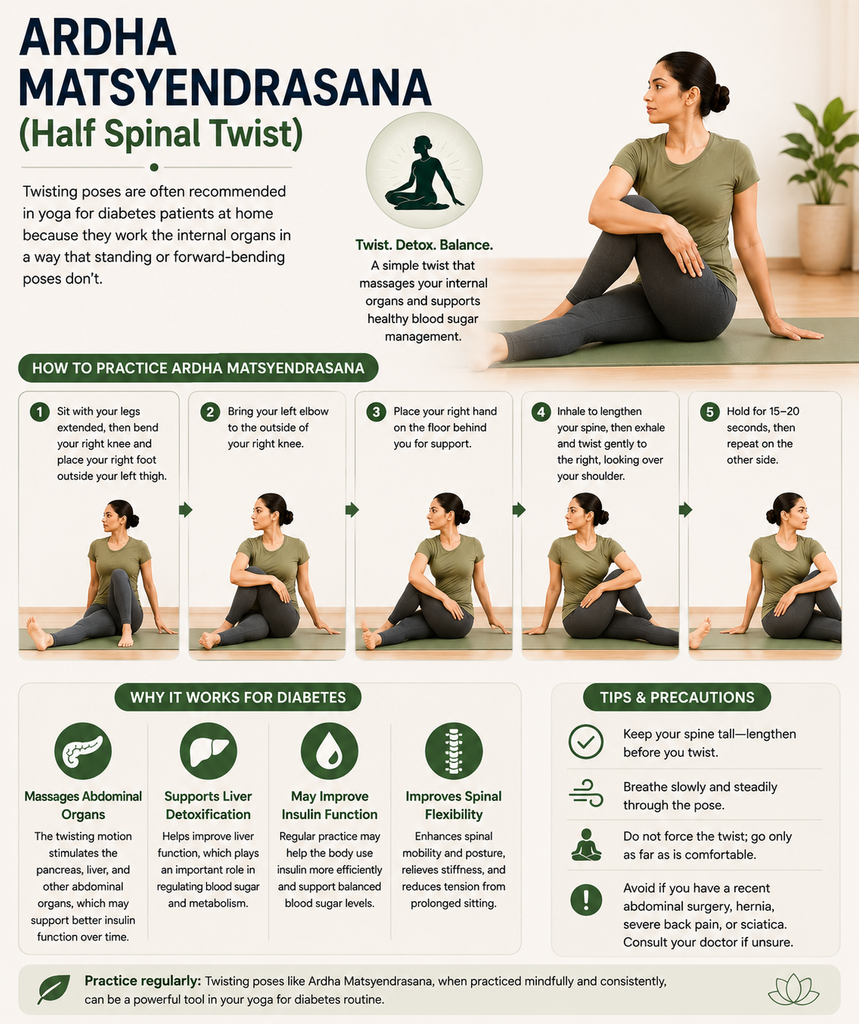
Twisting poses are often recommended in yoga poses for diabetes patients at home because they work the internal organs in a way that standing or forward-bending poses don’t.
How to Practice Ardha Matsyendrasana
- Sit with your legs extended, then bend your right knee and place your right foot outside your left thigh.
- Bring your left elbow to the outside of your right knee.
- Place your right hand on the floor behind you for support.
- Inhale to lengthen your spine, then exhale and twist gently to the right, looking over your shoulder.
- Hold for 15–20 seconds, then repeat on the other side.
Why It Works for Diabetes
The twisting motion massages the abdominal organs, including the pancreas and liver, which may support better insulin function over time. This pose also improves spinal flexibility and can relieve tension built up from sitting at a desk all day.
5. Setu Bandhasana (Bridge Pose)
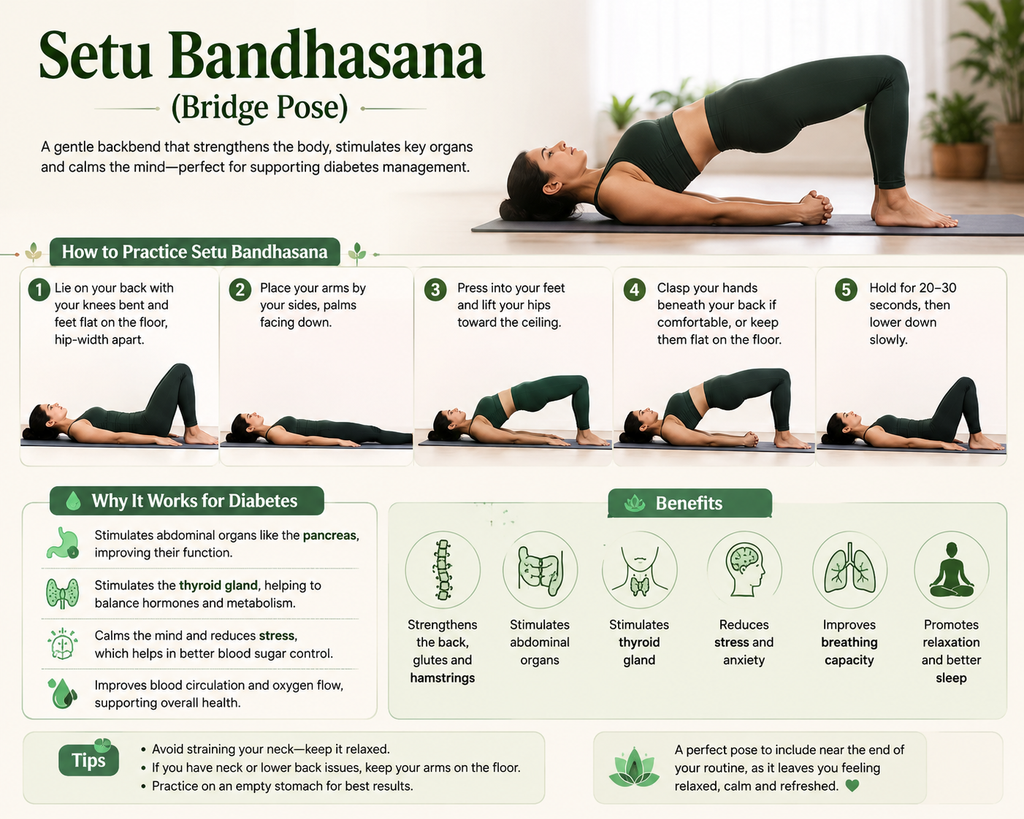
Bridge Pose is a gentle backbend that’s easier on the spine than deeper poses like Dhanurasana, making it a good option for beginners.
How to Practice Setu Bandhasana
- Lie on your back with your knees bent and feet flat on the floor, hip-width apart.
- Place your arms by your sides, palms facing down.
- Press into your feet and lift your hips toward the ceiling.
- Clasp your hands beneath your back if comfortable, or keep them flat on the floor.
- Hold for 20–30 seconds, then lower down slowly.
Why It Works for Diabetes
Setu Bandhasana stimulates the abdominal organs and thyroid gland while also calming the mind and reducing stress. It’s a good pose to include near the end of a routine, since it tends to leave practitioners feeling relaxed rather than energized.
How to Build a Daily Yoga Routine for Diabetes at Home
A simple daily routine combines these five poses into a 20–30 minute practice, done in the morning or a few hours after a meal, alongside slow, deep breathing.
Here’s a sample flow to get started:
- 5 minutes: Seated breathing warm-up (deep inhales and exhales)
- 5 minutes: Vajrasana
- 5 minutes: Paschimottanasana
- 5 minutes: Ardha Matsyendrasana (both sides)
- 5 minutes: Setu Bandhasana
- 5 minutes: Dhanurasana (if comfortable) or seated relaxation
Consistency matters more than intensity. Practicing for 20 minutes most days of the week of these 5 yoga poses for diabetes will generally offer more benefit than an occasional hour-long session. If you’re new to yoga, start with just two or three of these poses and add the rest gradually as your flexibility and stamina improve.
Precautions to Keep in Mind
Yoga is generally low-risk, but a few precautions apply specifically to people managing diabetes:
- Check your blood sugar before and after practice, especially if you’re on insulin or medications that can cause hypoglycemia.
- Avoid practicing on an empty stomach if you’re prone to low blood sugar; a small snack beforehand can help.
- Skip deep backbends and inversions if you have diabetic retinopathy or uncontrolled high blood pressure, and consult your doctor first.
- Wear comfortable clothing and practice on a non-slip mat to avoid injury, particularly if you have reduced sensation in your feet due to neuropathy.
- Listen to your body. Mild stretching discomfort is normal; sharp pain is not.
Final Thoughts: Making Yoga Part of Your Diabetes Care Routine
Managing diabetes is a daily commitment, and yoga offers a low-impact, accessible way to support that effort from the comfort of your home. These 5 yoga poses for diabetes—Vajrasana, Dhanurasana, Paschimottanasana, Ardha Matsyendrasana, and Setu Bandhasana—target the abdominal organs, reduce stress, and encourage the kind of gentle, consistent movement that supports healthy blood sugar levels over time.
As with any new health practice, start slow, listen to your body, and check in with your doctor before beginning, especially if you have existing complications like neuropathy, retinopathy, or heart conditions. Combined with a balanced diet, prescribed medication, and regular monitoring.
FAQ’S – Yoga Poses for Diabetes
Can yoga cure diabetes?
No. Yoga cannot cure diabetes, but it can be a helpful part of a broader management plan that includes diet, medication, and regular monitoring, potentially improving insulin sensitivity and reducing stress-related blood sugar spikes.
How often should diabetics practice yoga?
Most practitioners recommend 20–30 minutes of yoga, four to six days a week, for noticeable benefits in blood sugar management and overall well-being. Even short daily sessions tend to be more effective than infrequent long ones.
What is the best time to do yoga poses for diabetes?
Morning practice on an empty stomach or a light practice a few hours after a meal both work well; the key is consistency rather than a single “best” time. Practicing after meals may specifically aid digestion and post-meal glucose response.
Is yoga safe for people with type 1 diabetes?
Yoga is generally safe for people with type 1 diabetes, but blood sugar should be monitored closely before and after practice since physical activity can affect insulin needs. Always coordinate any new exercise routine with your healthcare provider.