
What is Headstand?
The headstand has also known as “Sirsasana” and “King of all the asanas”. A headstand is a pose that is an inversion posture of standing head down.
This Yoga asana awakens your spiritual awakening deep down in the sense of your brain.
Here are the 11 Benefits of Headstand –
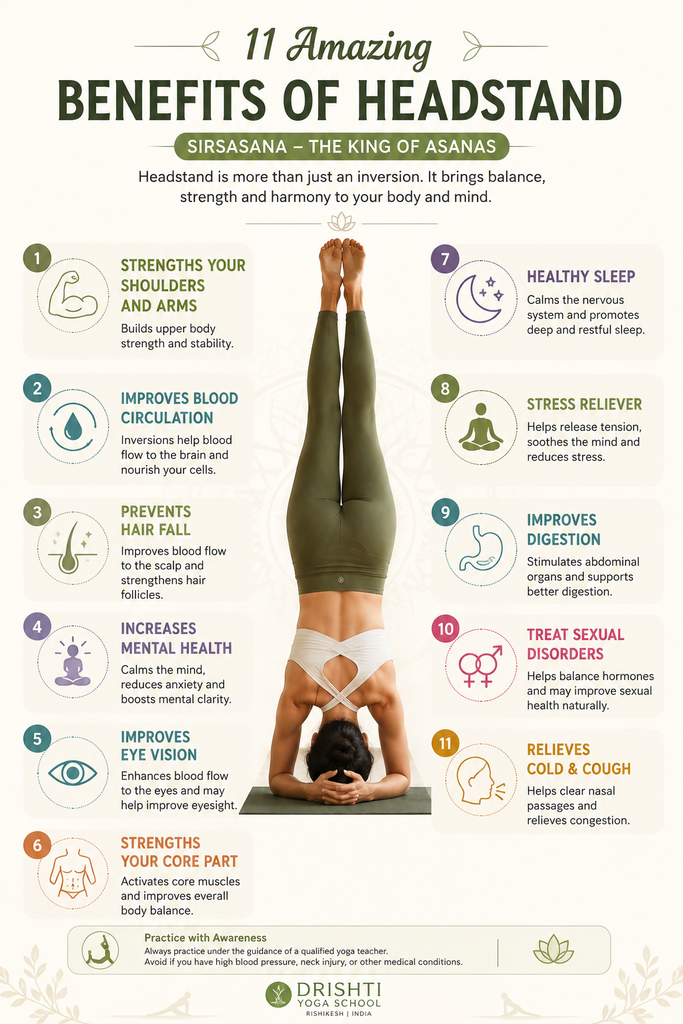
1 – Strengths your Shoulders and Arms

Headstand is an amazing posture to increase the strength of your arms. When you’re in a headstand, you should be pushing the edges of your hands, wrists, and forearms into the ground. This means you will be using the strength of your arms and shoulders to hold you up, instead of putting pressure on your neck and spine.

2 – Improves Blood Circulation
Regular practice of Headstands makes pure blood flow through our brain cells and it makes our brain much more active. This is one of the more consistently reported effects of headstand across both traditional (vedic)yoga teaching and modern practitioner experience. It is one of the most popular benefits of headstand.
3 – Prevents hair fall

Hair loss, greying of hair and baldness is frequently caused because of bad blood circulation in the scalp. Headstand doesn’t only direct enriched blood to the brain(Cerebrum), also it also sends it to the scalp. The changing of grey hair into its original colour and great development of hair is conceivable through the act of this headstand yoga pose.
Also read – Guide to Upward Facing Dog pose
4 – Increases Mental Health
Headstand Asana sparks the nervous system and increases mental alertness and clarity. It’s one of the most common benefits of headstand. Many yoga practitioners describe this effect as similar to the mental clarity gained from seated meditation pose, just accessed through a physical challenge instead.
5 – Improves eye vision
Headstand improves the overall functions of our eyesight, sense of smell and taste. The extra supply of blood during Headstand helps to work the sensory organs properly. A general bad hearing has been found to improve by regular practice of Headstand.
6 – Strengths Your Core Part

In order to hold a straight headstand, a practitioner must engage the abdominal muscles — including the obliques, the rectus abdomen, and the transverse abdominus. The center is reinforced especially if the expert lifts or brings the two legs without a moment’s delay down to come into and out of the headstand.
7 – Healthy Sleep
Headstand can help those people who are suffering from the loss of sleep, memory by the regular practice of this asana. Some yoga practitioners report improved sleep quality with regular inversion practice of headstand, likely connected to the overall stress-reducing and nervous-system-calming effects of the pose rather than any direct mechanism
8 -Stress Reliever
Headstands also reduce the production of cortisol, the stress hormone, and increases blood flow to the brain, stimulating the production of melatonin, dopamine and serotonin, all hormones that help regulate mood.
9 – Improves Digestion
When the body is upside down, the pituitary organ, which plays a role in healthy digestion, is stimulated. Headstands are recommended for irritable bowel disorder and other digestive sicknesses, as they reorient the colon and digestion tracts, encouraging a bowel movement. This is the best benefits of headstand.
10 – Treat sexual disorders
Headstand helps in oppose of sexual disorders such as prostate problems hydrocele, leucorrhea, spermatorrhea, and menstrual ailments. This yoga asana drains blood from the associated sexual endocrine glands and organs, thus improving the functional efficiency of the part.
11 – Relieves cold & cough
By practising this Yoga Pose our lungs gain the power to resist any climate and stand up to any work, thus helpful in relieving colds, coughs, and tonsillitis.
Who Should Avoid Headstand
Headstand is an advanced, high-risk pose, and it isn’t right for everyone. You can get benefits of headstand only when you do it properly. You should avoid or modify headstand — and check with a doctor before attempting it — if you have any of the following:
- Neck or spine injuries, including herniated discs or cervical spine issues
- High or low blood pressure that isn’t well controlled
- Glaucoma or other eye conditions, since inversion increases pressure in the eyes
- Pregnancy, particularly if you’re new to inversions
- Recent history of stroke, heart conditions, or blood clots
- Vertigo or inner ear conditions that affect balance
- Osteoporosis, due to the weight-bearing pressure on the neck and spine
What am I missing here in this “Benefits of Headstand” Blog Post? Let me know in the comments and I’ll add it in.
Join our yoga teacher training in Rishikesh and get 100 USD OFF.
Frequently Asked Questions – Benefits of Headstand
How long should a beginner hold a headstand?
Beginners should start with just a few seconds against a wall and build up gradually over several weeks, prioritizing stable alignment over hold time.
Do I need to be flexible to do a headstand?
No — headstand relies far more on shoulder, arm, and core strength than on flexibility, which is why building strength through poses like Dolphin Pose is a more useful starting point than stretching.
Can headstand help with anxiety and stress?
Yes — headstand has been associated with reduced cortisol and increased mood-supporting neurotransmitters, and the intense focus it requires has a genuinely calming, meditative effect for many practitioners.
What Is the Best Time to Do a Headstand?
The best time to practice Headstand (Sirsasana) is early in the morning on an empty stomach.