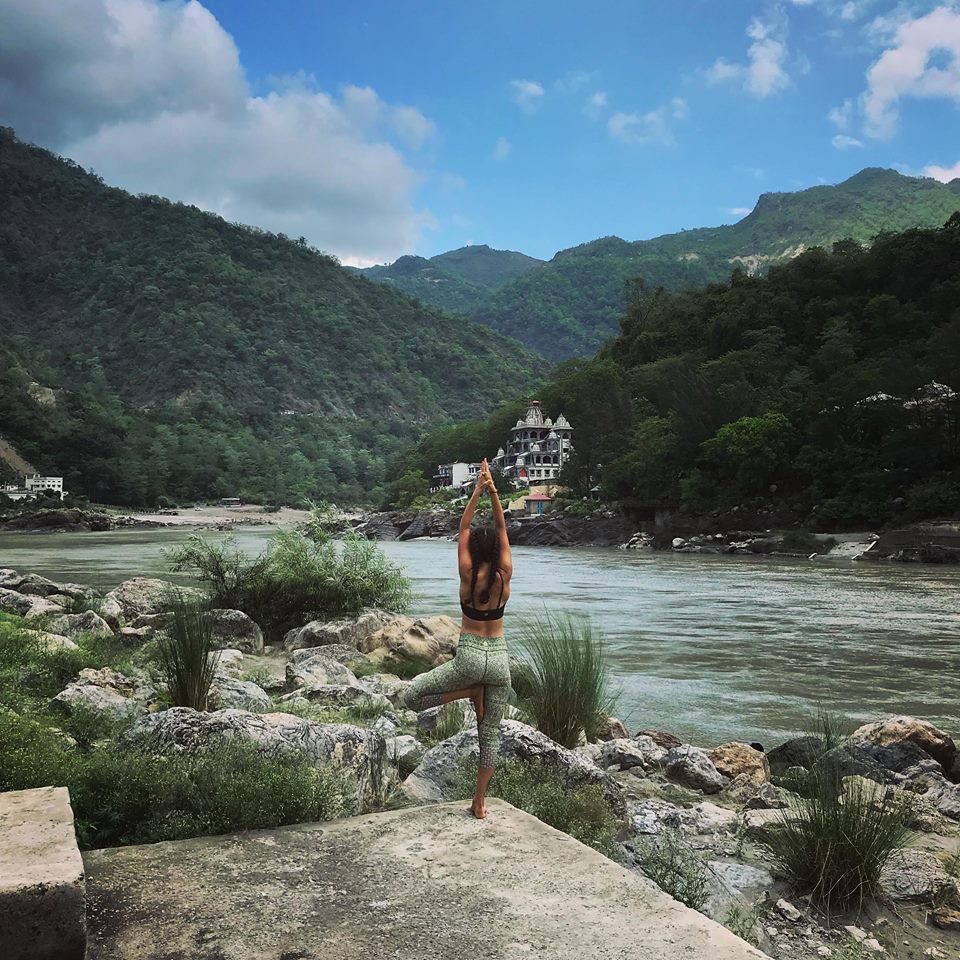
Purna Dhanurasana

(Full Bow Pose) = final and advanced posture of Dhanurasana (Bow Pose)
• Level: Advanced
• Type: Back-bend, Stretch, Strength
• Position: Prone
• Duration: 15-20 sec.
Purna Dhanurasana (Full Bow Pose = The final and advanced Dhanurasana (Bow Pose) – In this asana, your whole body seems to be in a shape like a fully stretched bow, a deep back-bend pose which opens your heart.

Purna Dhanurasana Meaning –
Purna= Full, Dhanur = Bow, Asana= Posture.

Important to know before you practice Purna Dhanurasana:
• Be sure that your muscles and joints are warm enough.
• This asana should not be practiced in a full stomach.
• Avoid this asana if you have a weak back or weak joints.
• Don’t strain or push your body beyond the limits.
• This asana is more beneficial when practiced before or after forward bending asanas.
Purna Dhanurasana Benefits:
• Improves flexibility of back, shoulders, and hips.
• Stretches and strengthens the muscles.
• Strengthens the heart.
• Improves digestion.
• Improves blood circulation.
• Removes the excess body fat.
• Massages the muscles & abdominal organs.
• Removes tension, anxiety & relaxes the body.
• Rid of gastritis pain.
• Rid of menstrual pain.
Purna Dhanurasana Contraindications:
• Hernia
• High blood pressure
• Colitis
• Heart problems
• Back injury
• Neck injury
• Any joint injury
• Recent abdominal surgery
• Pregnancy
Preparatory Poses for Purna Dhanurasana
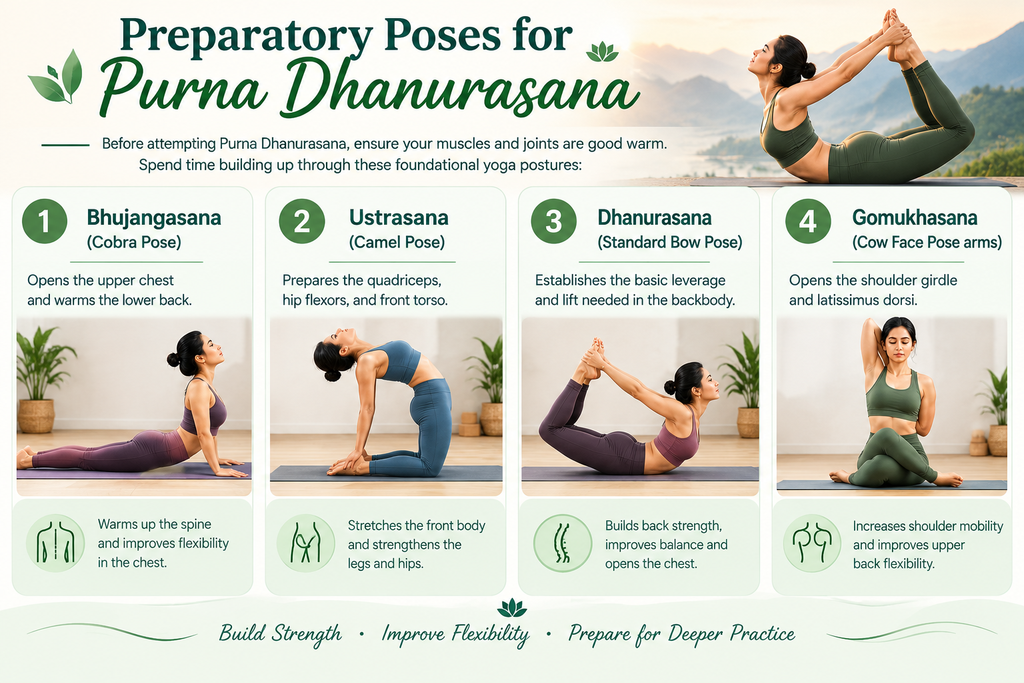
Before attempting Purna Dhanurasana, ensure your muscles and joints are good warm. Spend time building up through these foundational yoga postures:
- Bhujangasana (Cobra Pose): Opens the upper chest and warms the lower back.
- Ustrasana (Camel Pose): Prepares the quadriceps, hip flexors, and front torso.
- Dhanurasana (Standard Bow Pose): Establishes the basic leverage and lift needed in the backbody.
- Gomukhasana (Cow Face Pose arms): Opens the shoulder girdle and latissimus dorsi.
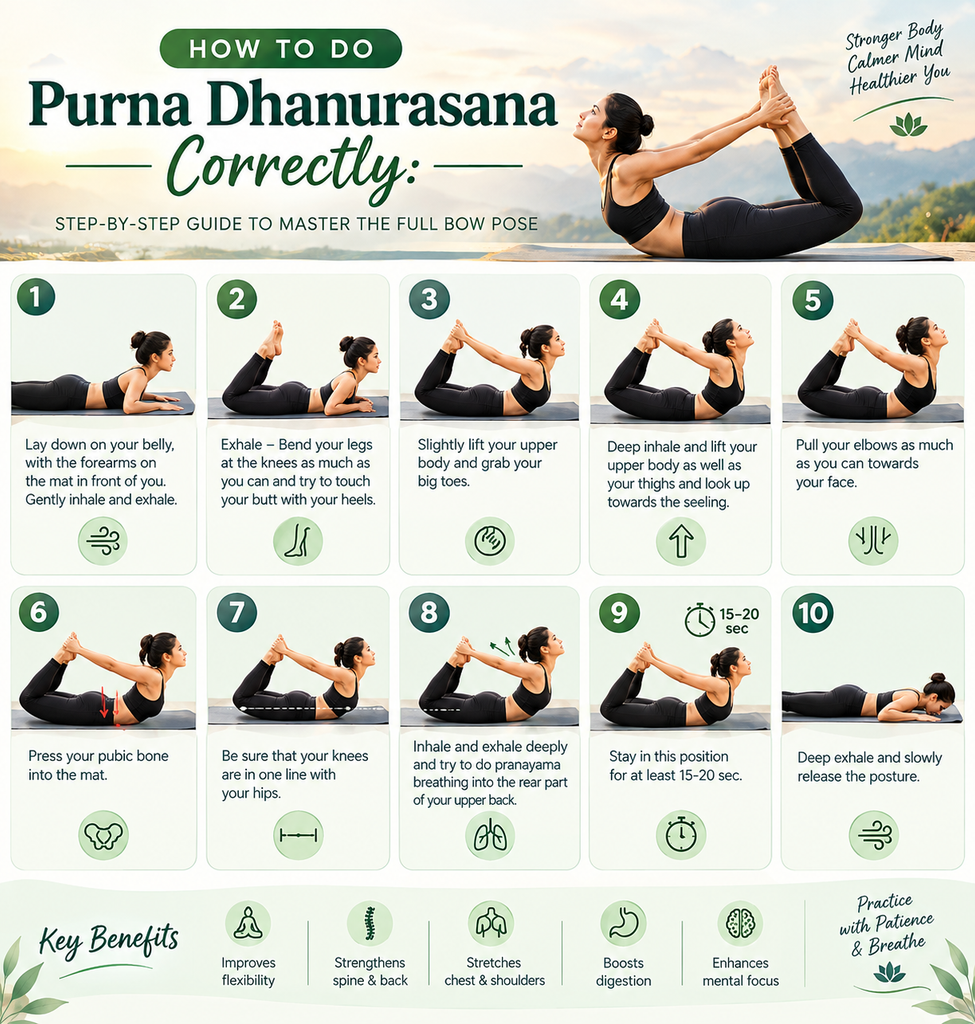
How to do Purna Dhanurasana correctly:
1.) Lay down on your belly, with the forearms on the mat in front of you. Gently inhale and exhale.
2.) Exhale – Bend your legs at the knees as much as you can and try to touch your butt with your heels.
3.) Slightly lift your upper body and grab your big toes.
4.) Deep inhale and lift your upper body as well as your thighs and look up towards the ceiling.
5.) Pull your elbows as much as you can towards your face.
6.) Press your pubic bone into the mat.
7.) Be sure that your knees are in one line with your hips.
8.) Inhale and exhale deeply and try to do pranayama breathing into the rear part of your upper back.
9.) Stay in this position for at least 15-20 sec.
10.) Deep exhale and slowly release the posture.
What am I missing here? Let me know in the comments and I’ll add it in.
Take Your Practice Further
Ready to deepen your yoga journey and master advanced postures like Purna Dhanurasana/ Full Bow Pose? Join our 200 Hour Yoga Teacher Training in Rishikesh at Drishti Yoga School. Gain hands-on the guidance from our certified expert teachers, refine your alignment, and transform your practice in the birthplace of yoga. Enroll today and get 10% off!
FAQ’S Purna Dhanurasana
How long should I hold the Full Bow posture?
Hold the pose for 15–20 seconds while taking deep, steady breaths directed into your upper back. Never force or strain your body.
Do I need to warm up before attempting it?
Yes. Always practice on an empty stomach with thoroughly warmed-up your muscles and joints. Pair it with forward-bending poses to balance your spine.
Who should avoid practicing Full Bow Pose?
Avoid this pose if you are pregnant or have high blood pressure, heart issues, a hernia.
What is the difference between Dhanurasana and Purna Dhanurasana?
Dhanurasana is the traditional Bow Pose, while Purna Dhanurasana is a deeper variation that requires greater spinal flexibility and shoulder mobility.